
The Sanford Civil Rights Team hopes to educate students about Black History Month through this year’s theme: Labor
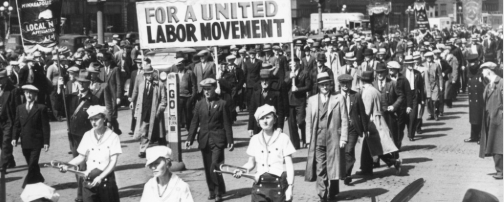
Submitted by Grace Pearson, Allie Herring and Alex Fraise
January 30, 2025
SANFORD, Maine – February is Black History Month. This year, the Association for the Study of African American Life and History created the theme of labor.
Dating back to the early days of the United States, when Southern landowners used slaves to work their land, Black people have struggled for fair labor laws. These difficulties extended far beyond the Civil War.
At the end of the Civil War, Confederate soldiers created “Black codes” that punished newly freed slaves and people who wouldn’t conform, said the Labor Commission on Racial and Economic Justice. The codes limited a black person’s right to teach, preach, travel or hold property.
Thousands of people were murdered in the first years after emancipation when they tried to leave plantations or refused to work.
Regardless, leaders such as Martin Luther King Jr. (1929-1968), Velma Hopkins (1909-1996), Dorothy Lee Bolden (1923-2005) and A. Philip Randolph (1889-1979) dedicated significant strength and effort to the labor movement.
Notably, when America began to prepare for war again in 1940, A. Philip Randolph succeeded in convincing President Roosevelt to ban discrimination in defense industries in 1941 after claiming he would march 50,000 Black men to Washington for the cause, said the Labor Commision on Racial and Economic Justice. Roosevelt created a Fair Employment Commission to enforce this.
“Both union and civil rights activists understood that labor rights are human rights, and that to constrain a person’s liberty—to choose one’s work, to earn enough to support a family, to marry, to travel—is a deliberate act of coercion,” said the Labor Commission on Racial and Economic Justice.
Over years of tireless activism and numerous movements, progress toward ethical labor rights has started to take form.
According to the Pew Research Center, “There are more than 21 million Black Americans in the U.S. labor force today.” Their experiences in the workforce stands out for multiple reasons: They are more likely to be employed in certain jobs such as postal work, health care, security fields and transit. They also bring a high quality work ethic to the jobs they hold.
However, they also report experiencing more racial discrimination while working.
A 2021 Center survey said that “Black adults see barriers for Black workers in STEM fields, including an unwelcoming professional environment and the need for more mentorship and representation for young people in science, technology, engineering and math.”
While progress has been made, there are still many problems that Black workers face today.
“About four-in-ten Black workers (41%) say they have experienced discrimination or been treated unfairly by an employer in hiring, pay or promotions because of their race or ethnicity,” said Pew Research Center.
The average earnings weekly for Black workers ages 16 and older is $878, compared with $1,059 for other workers in the same age group in the U.S, said data from the Bureau of Labor Statistics’ from 2022.
ABOUT THE CIVIL RIGHTS TEAM
The Civil Rights Team is an organization dedicated to helping our school community have conversations about all religions, races and skin colors, gender identities and expressions, national origins and ancestries, disabilities and sexual orientations feel welcome in our school.
 The Spartan Times